

Rates Hit a 28-Month High. Here's What It Means for You.
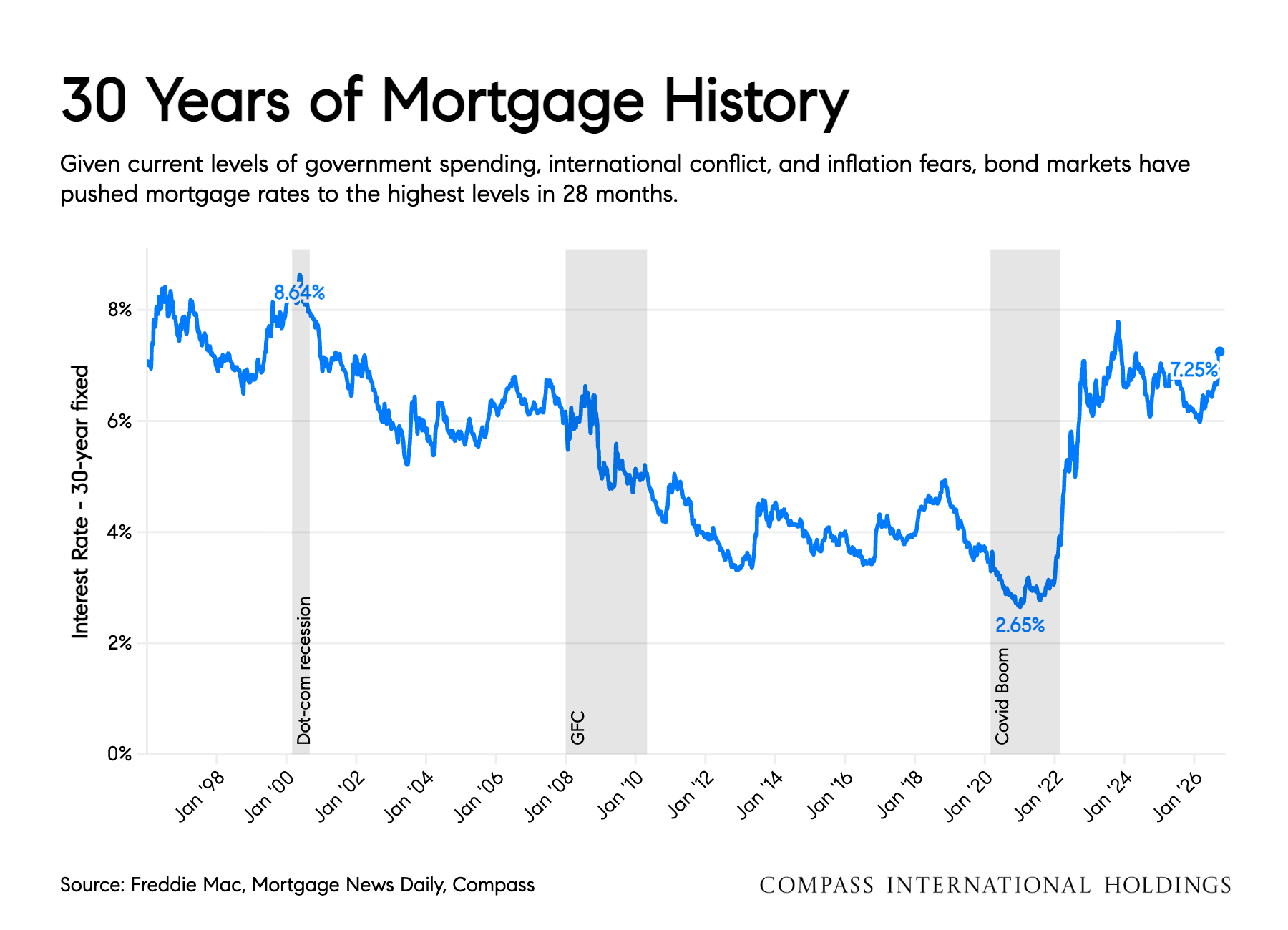
Mortgage rates climbed to 7.25% in September — the highest in 28 months — as the Fed raised rates for the first time in three years. Demand has cooled at the lower price points, but inventory is finally growing again, and Arizona remains one of the more balanced markets in the country. Here's the full picture, and what it means for McDowell Mountain Ranch and Arrowhead Ranch.
The headline: rates jumped, and the Fed moved
September brought the sharpest shift in the housing market we've seen this year, and it started in the bond market. The 10-year Treasury yield pushed above 5.1% — its highest level since 2007 — and mortgage rates followed, landing around 7.25%. The Fed raised rates for the first time in three years, and bond markets are now pricing in additional hikes in October and December.
Why: the economy is running hot
This isn't a slowdown story. Services activity just posted its strongest reading in three years. The economy added 162,000 jobs in August, unemployment claims remain near historic lows, and oil is back above $100 a barrel. Inflation moved up again this summer — CPI at 3.4%, PCE at 3.7%, both well above the Fed's 2% target. The market has shifted from worrying about a slowdown to worrying about “growthflation”: an economy strong enough, and prices high enough, to justify higher rates for longer.
What it's doing to demand
Housing demand is feeling the rate pressure. Pending sales over the last four weeks are running about 4% below last year, and every high-frequency demand indicator we track — pending sales, mortgage purchase applications, and mortgage intent data — has turned down as rates jumped. That softness is concentrated at the lower price points. Luxury is a different story: with the S&P 500 up nearly 16% year over year, the wealth effect is keeping higher-end demand ahead of where it was in 2025.
What it means locally: Arizona is more balanced than you'd think
Here's the part that matters most if you're buying or selling in the Valley. On Compass's state-by-state supply-and-demand index, Arizona isn't sitting in deep buyer's-market territory like Texas or Florida, and it isn't as tight as the Midwest and Northeast markets where inventory is scarce. It's close to the national middle — a genuinely balanced market, which is a healthier place to transact than the extremes on either side.
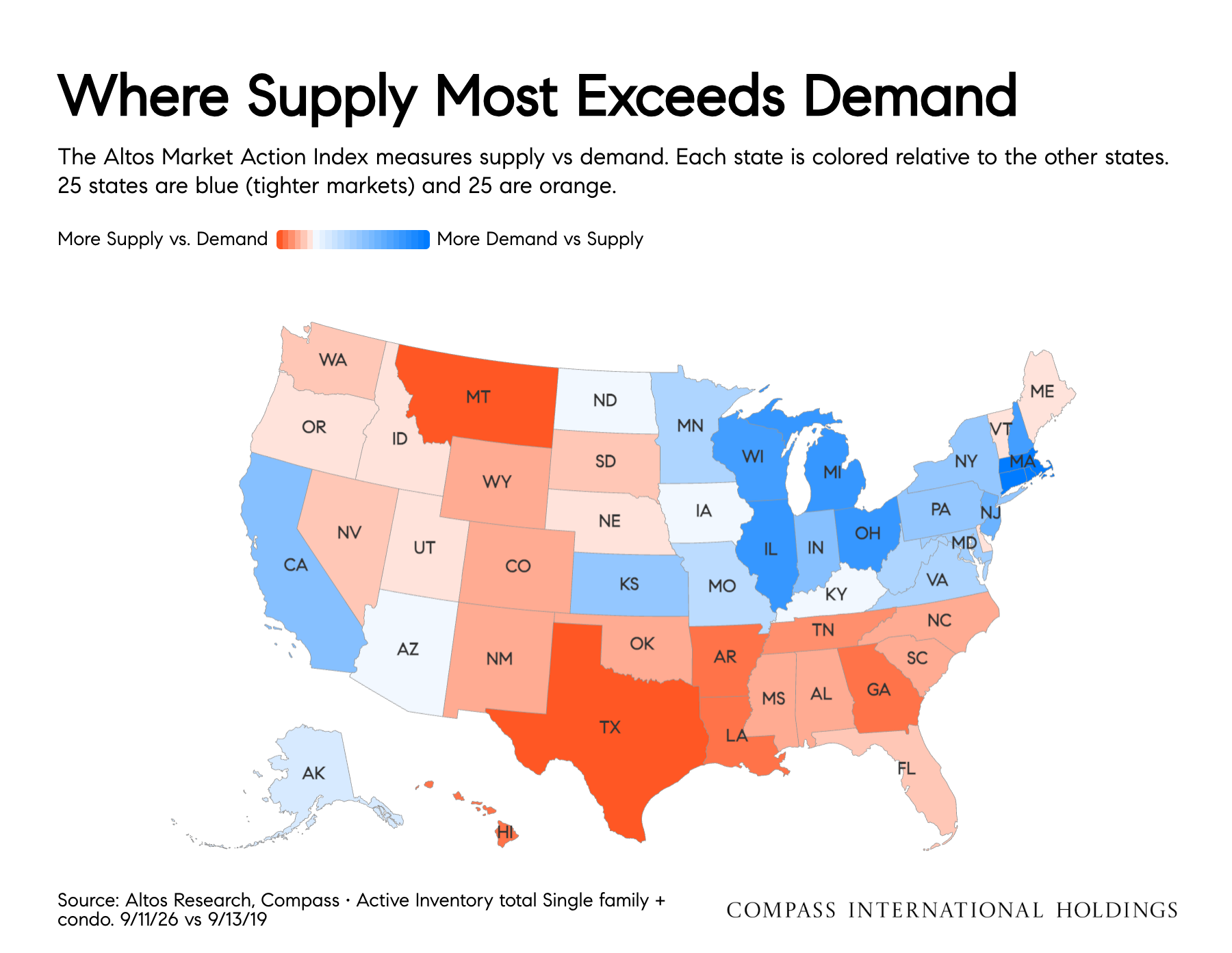
For McDowell Mountain Ranch and Arrowhead Ranch specifically, that balance is showing up as steadier days-on-market and more room to negotiate than we saw during the tightest years of the pandemic run-up — without the kind of oversupply that's pressuring prices lower in parts of the Sun Belt.
The silver lining: more homes are coming
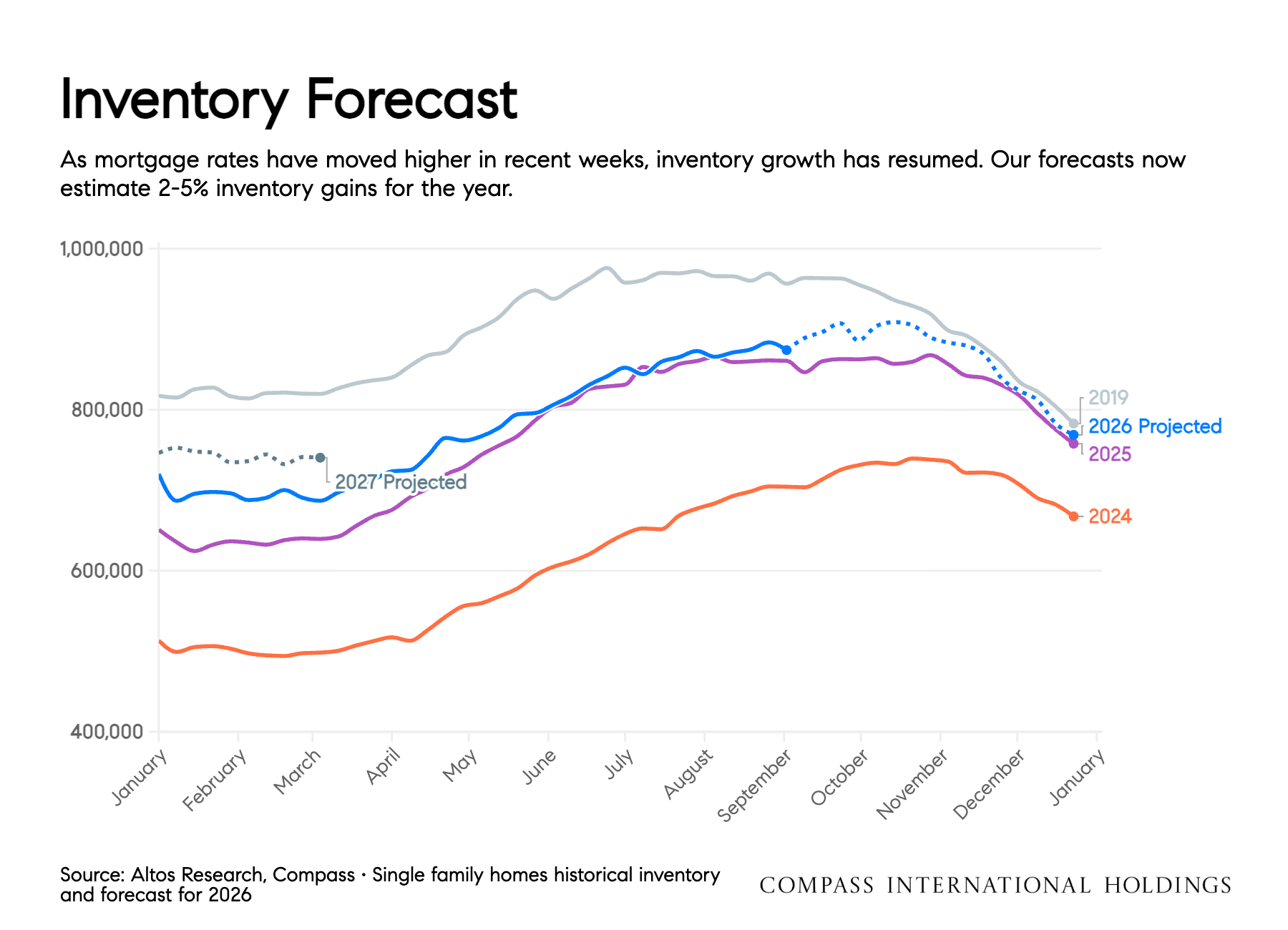
On the supply side, inventory is growing again, and we now expect 2–5% more listings nationally by year end. Supply is still about 5% below 2019 levels nationally, but the direction has turned. Home prices are holding steady — up 1.5% year over year — and median list prices have stayed in a narrow band for four years.
Importantly, this isn't a distressed market. Mortgage delinquencies are near 1%, and foreclosures remain very low by historical standards. Higher rates are cooling demand at the margins, not breaking the market.
So, should you wait?
There's no universal answer, but the calculus is shifting. If you're buying, more inventory means more choices and more negotiating leverage than you'd have had a year ago — even with a higher rate, and rates can be refinanced later if they come down. If you're selling, pricing accurately matters more than it did when almost anything sold fast; homes priced to the current market are still moving. We're happy to run the numbers for your specific situation — reach out any time.
Get next month's update before it's public.
One email a month. Rates, prices, and what's actually happening in McDowell Mountain Ranch and Arrowhead Ranch.
Sign Up FreeWondering what this means for your specific plans?
Whether you're buying, selling, or just keeping an eye on the market, we're happy to talk through the numbers for your neighborhood.
Contact Lexi + Briette